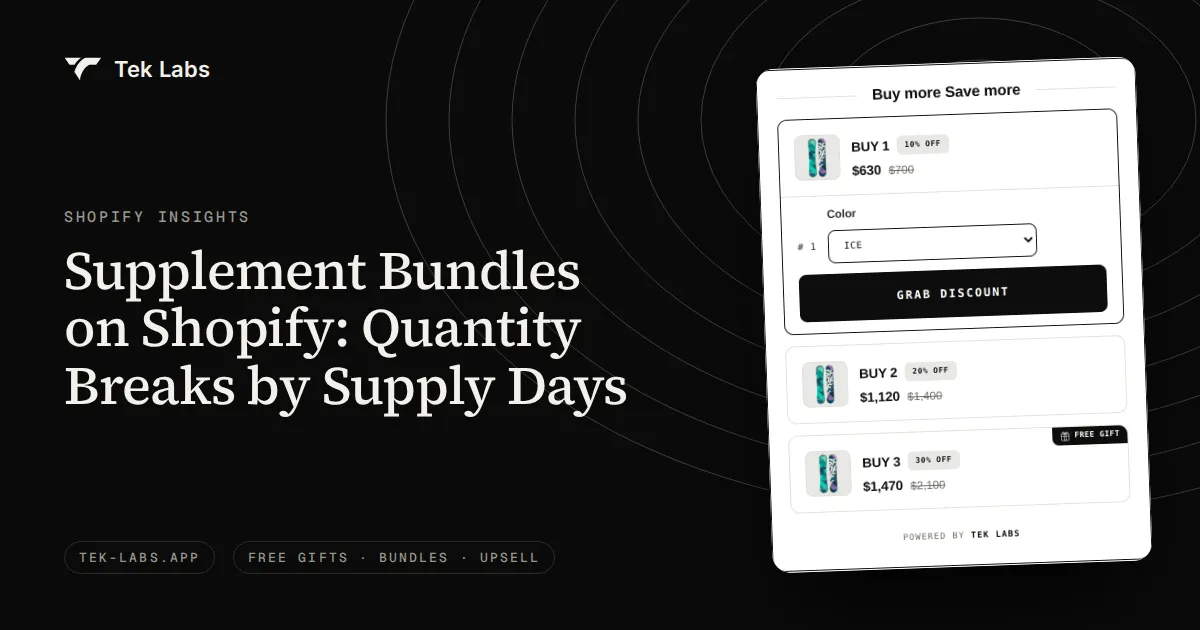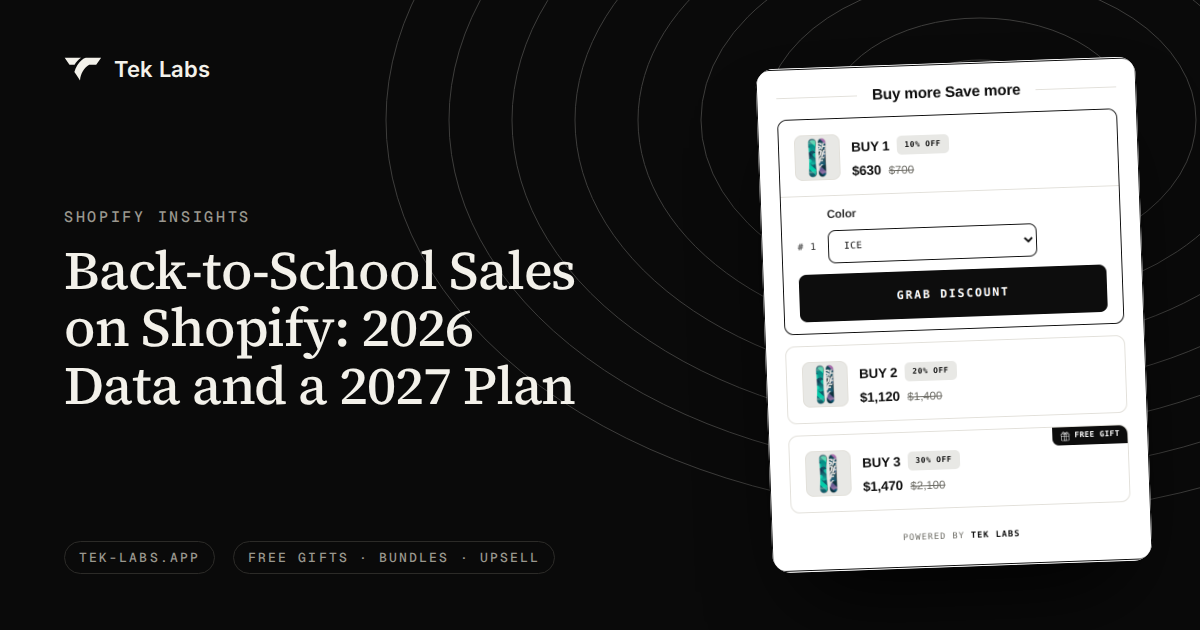
A good back-to-school sale on Shopify starts before July, runs until the week before classes begin, and relies on bundles and spend thresholds more than deep sitewide discounts. The National Retail Federation’s 2026 survey found that 62% of US shoppers had started by early July, 46% of those with shopping left were waiting for the best deals, and promotions drove an average 48% of purchases, so value, timing and convenience decide who wins the order.
Key takeaways
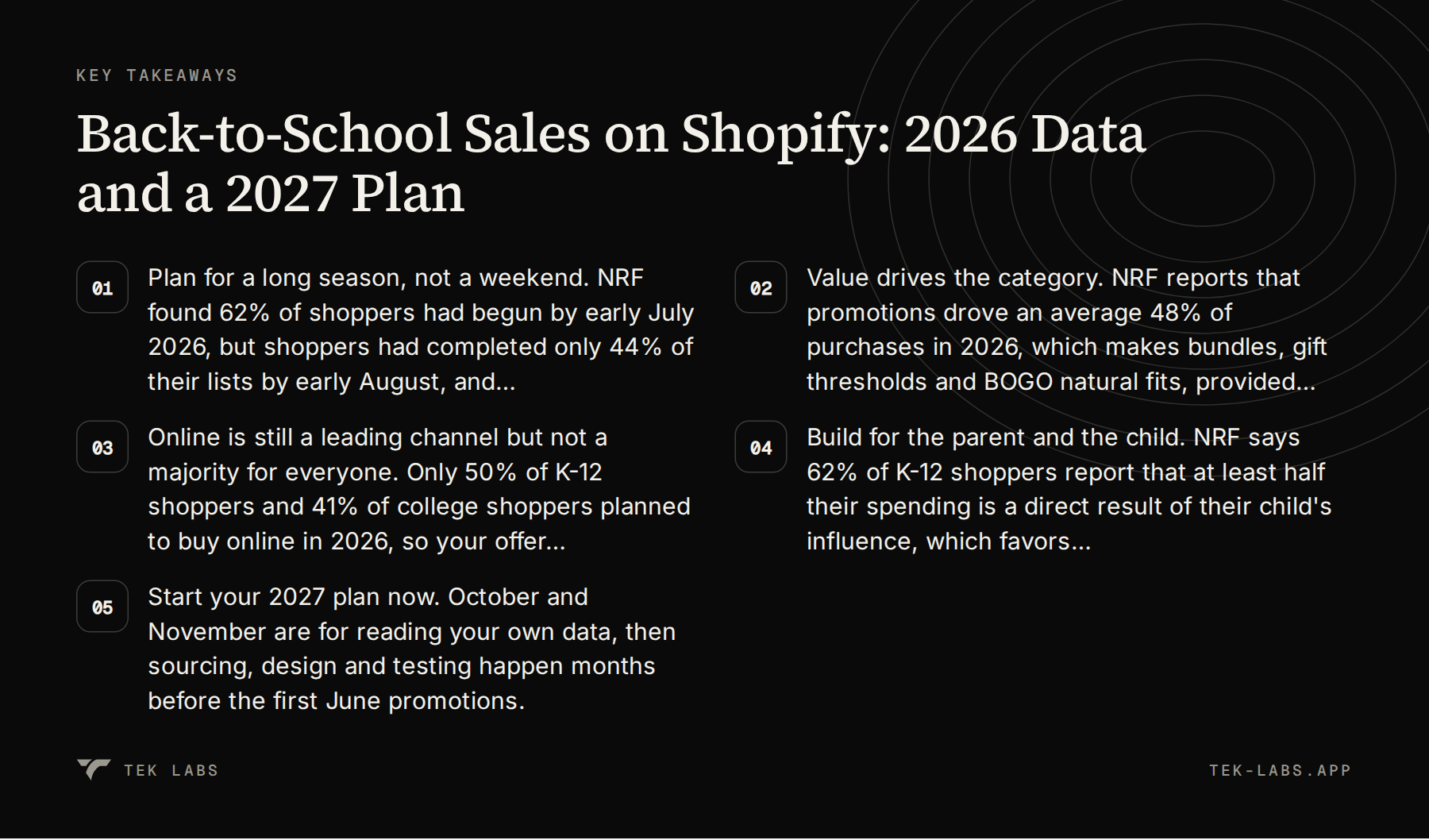
- Plan for a long season, not a weekend. NRF found 62% of shoppers had begun by early July 2026, but shoppers had completed only 44% of their lists by early August, and most K-12 shoppers (52%) planned to finish in the week or two before school.
- Value drives the category. NRF reports that promotions drove an average 48% of purchases in 2026, which makes bundles, gift thresholds and BOGO natural fits, provided margins work.
- Online is still a leading channel but not a majority for everyone. Only 50% of K-12 shoppers and 41% of college shoppers planned to buy online in 2026, so your offer has to beat convenience and price elsewhere.
- Build for the parent and the child. NRF says 62% of K-12 shoppers report that at least half their spending is a direct result of their child’s influence, which favors “build a box” and choice-based gifts.
- Start your 2027 plan now. October and November are for reading your own data, then sourcing, design and testing happen months before the first June promotions.
What NRF’s 2025 and 2026 data say
Much of the advice about back-to-school sales still quotes data from 2022 to 2024. These are the current numbers from the National Retail Federation and Prosper Insights & Analytics. The 2026 survey included 7,677 consumers, fielded July 1 to 8, with a margin of error of plus or minus 1.1 percentage points. The 2025 survey included 7,581 consumers, fielded July 1 to 7. Both are US surveys of planned or reported behavior.
| Measure | 2025 | 2026 |
|---|---|---|
| Average K-12 household spending | $858.07 | $863.86 |
| Total K-12 spending | $39.4 billion | $43.3 billion |
| Average college household spending | $1,325.85 | $1,437.79 |
| Total college spending | $88.8 billion | $103.5 billion |
| Shoppers who had started by early July | 67% | 62% |
| K-12 shoppers planning to buy online | 55% | 50% |
| College shoppers planning to buy online | 48% | 41% |
Two points about reading this table. First, “planning to buy online” is the share of shoppers who named online as a destination. It is not the share of dollars spent online, and shoppers can name several destinations. Older posts, including the earlier version of this one, blurred that difference. Second, the early-start figure dipped from 67% to 62% but, as NRF notes, is still well above the 55% recorded in 2024, so the early-start habit has stuck.
Where K-12 money goes
NRF also breaks down the average K-12 budget by category:
| Category | 2025 average | 2026 average |
|---|---|---|
| Electronics | $295.81 | $293.11 |
| Clothing and accessories | $249.36 | $250.29 |
| Shoes | $169.13 | $174.01 |
| School supplies | $143.77 | $146.45 |
Electronics are the largest line, but NRF’s August 2026 analysis says roughly one-third of total K-12 spending and one-quarter of college spending go to devices and gear, and that 20% of shoppers who are not purchasing electronics say the items are provided by the school. For most Shopify stores selling apparel, supplies, bags, lunchware or accessories, the supplies, clothing and shoes lines are the relevant ones, and the margins on those categories give you more room to build offers than electronics do.
What shoppers are telling you about how they buy
- Waiting for deals. Among shoppers who had not yet bought at least half their items, 46% said they were waiting for the best deals and 23% were spreading their budgets.
- Buying only essentials first. About 47% planned to buy only the essentials for the start of the school year and replenish supplies as needed during the year. That is a direct opening for a restock offer later in the year.
- Using June events. 54% said they shopped major June sales events such as Prime Day, Walmart Deals and Target Circle Deal Days specifically for school-related purchases. Amazon scheduled Prime Day 2026 for June 23 to 26 and promoted back-to-school items as part of it.
- Finishing late. NRF reported that shoppers had completed an average of 44% of their list by early August, up from 23% in early July, and 52% of K-12 shoppers said they would finish in the week or two before school starts.
- Using AI tools. 61% of shoppers said they used generative AI or other AI-powered tools to find prices, discounts and ideas.
- Spreading their influence. 62% of K-12 shoppers say at least half their back-to-school spending is a direct result of their child’s influence, and college shoppers aged 18 to 24 look for inspiration on Instagram and TikTok.
- Expecting higher prices. 78% expected higher prices on back-to-school items in 2026, compared with 84% in 2022.
What this adds up to, in our reading, is a shopper who starts early, buys in stages, compares deals, and values certainty. That points toward offers that are simple to compare and that reward adding more to the cart, rather than a single deep discount on one day.
Timing: a season in four windows
Because buying is spread out, it helps to treat the season as four windows with different goals. The window names and offers below are our recommendation. The supporting data are NRF’s.
| Window | Typical dates (US) | What shoppers are doing | What to offer |
|---|---|---|---|
| Early shoppers | June to mid-July | Planning around marketplace events, buying essentials and big-ticket items | Early-access bundles for your email list, price-lock messaging |
| Mid-season | Mid-July to early August | Waiting for deals, spreading budgets | Volume tiers, BOGO on consumables, free gift thresholds |
| Last two weeks | Early August to the first day of school | Finishing lists (52% of K-12 plan to finish in this window) | Fast-shipping messaging, ready-made kits, order-by cutoffs |
| After school starts | September to October | Replenishing, filling gaps teachers mention | Restock bundles, post-purchase offers, “second kit” offers |
Timing outside the US
School calendars are set locally, not nationally. In England, for example, the GOV.UK page on term dates tells parents to find dates on their local council’s website, and one London borough lists its autumn term starting Wednesday 2 September 2026. Since many US districts start in August, a store shipping to both needs two different last-two-weeks windows. The NRF figures in this article describe US shoppers only, so for the UK, Canada, Australia or the EU, check your own sales history by country before copying US timing.
Offers that fit back-to-school
Bundles: school kits and build-a-box
Shopify describes a bundle as a set of two or more related products, commonly offered at a discount, and lists increased average order value, curation, clearing old inventory and greater product visibility among the benefits. You need a bundles app installed to create them. Shopify’s own free Shopify Bundles app handles fixed bundles and multipacks, with limits of up to 30 components for fixed bundles.
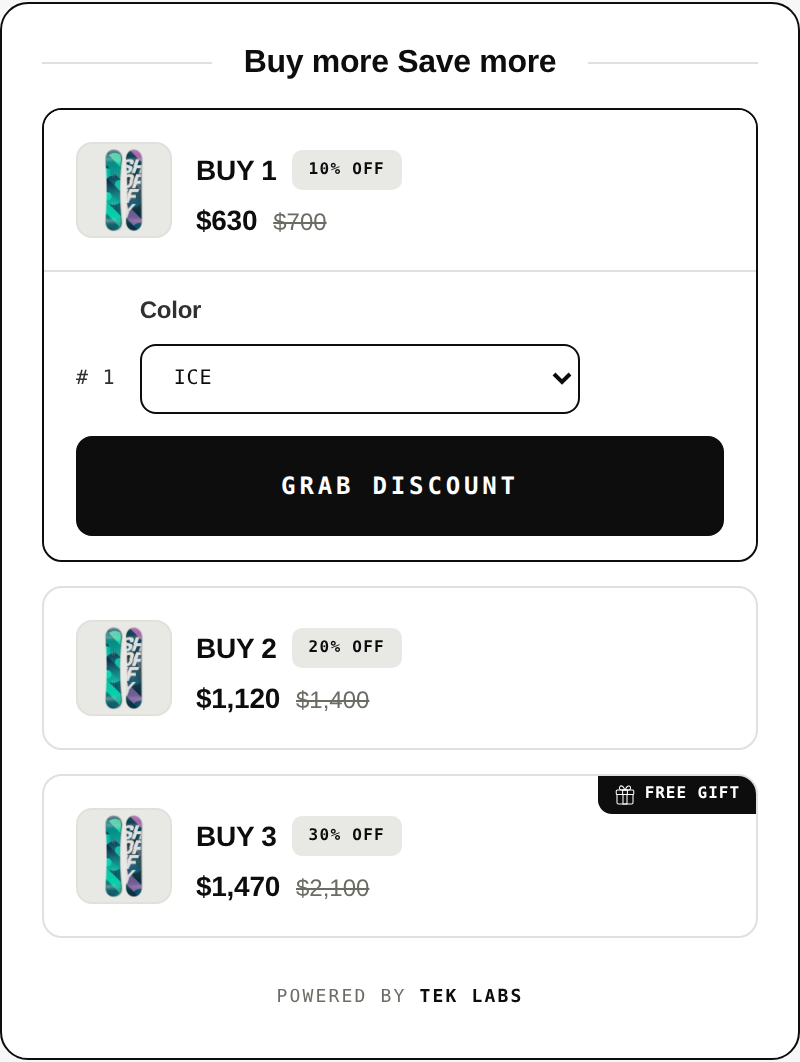
Back-to-school suits two bundle styles:
- Fixed kits. “Grade 3 supply kit”, “First-day outfit”, “Dorm starter set”. The shopper gets a ready-made list, which matters when NRF reports that most shoppers are still working through lists in August.
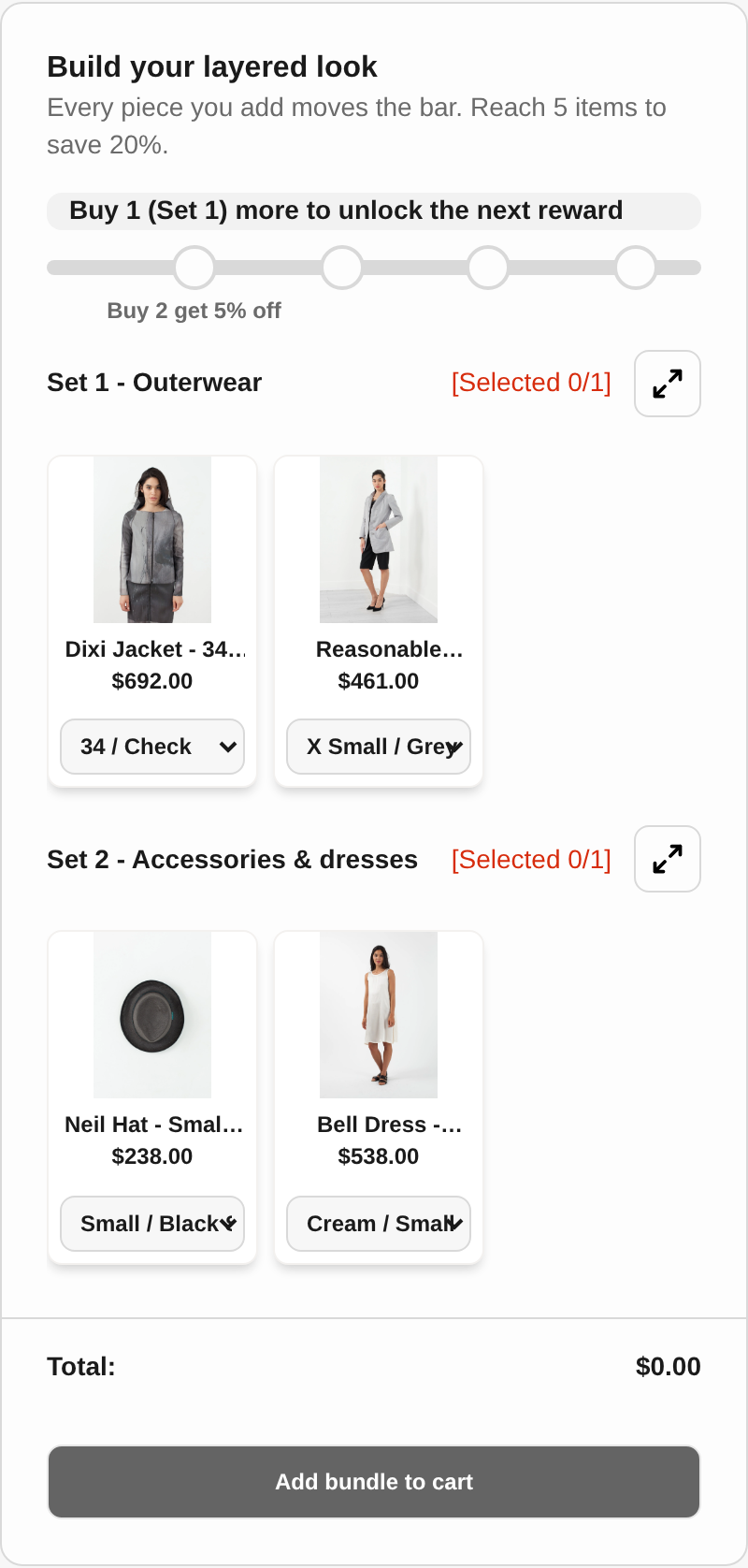
- Build a box. The shopper picks items from sets and a progress bar shows the discount level. This fits NRF’s finding that kids heavily influence K-12 spending, because the child can choose the colors or characters.
If you want tiered pricing, quantity breaks or a mix and match builder, our Mix & Match Bundles app supports fixed and tiered pricing, quantity breaks, free shipping and BOGO on bundles, and has a free plan.
BOGO and Buy X Get Y
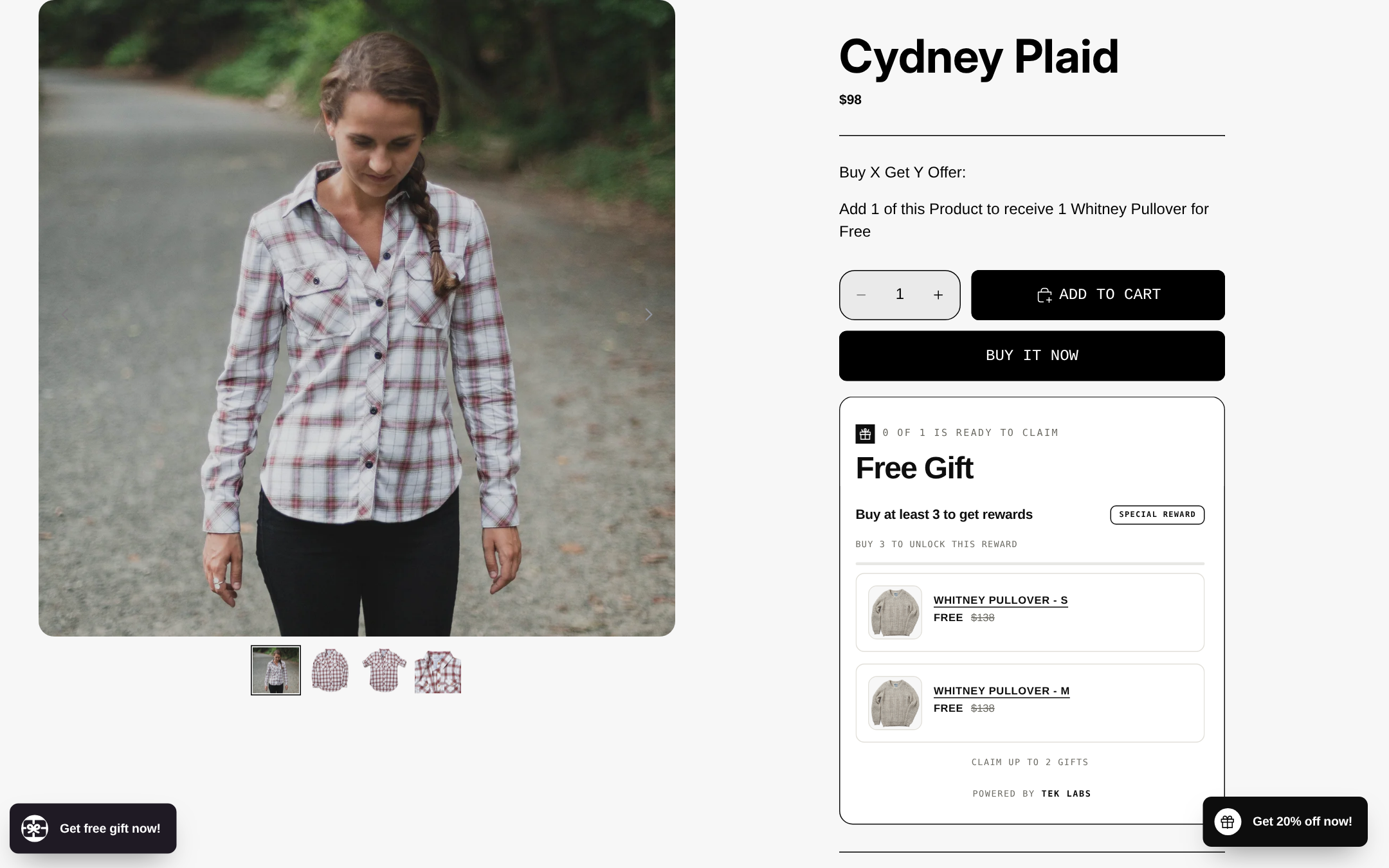
BOGO suits consumable, low-cost items where a second unit is easy to sell: notebooks, pens, folders, socks, lunch containers. It is a poor fit for high-priced items, where the free unit is a large cost. Shopify’s native Buy X get Y discount is the starting point. Two details matter for planning:
- The shopper does the work. Shopify states that customers must add all items to their cart manually and that the free or discounted “get” item is never automatically added. For a campaign, make sure the product page and cart explain what to add.
- Inventory limits the offer. If the inventory of the free products drops to zero, the products display as sold out and customers cannot use the discount. Count the free units as stock you are committing.
If you want gifts that appear in the cart automatically, or a choice of gift, that requires an app. We cover the differences in our comparison of Shopify’s default Buy X Get Y and third-party providers.
Free gifts at a threshold
A free gift at a spend threshold works well for back-to-school because the gift can be tied to the season: a pencil case with a backpack order, a sticker sheet with a supply kit, a lunch tote above a set spend. It has a clear cost, a clear goal for the shopper, and it keeps your sale price intact. The risks are the same as for any threshold: the gift costs money on every qualifying order.
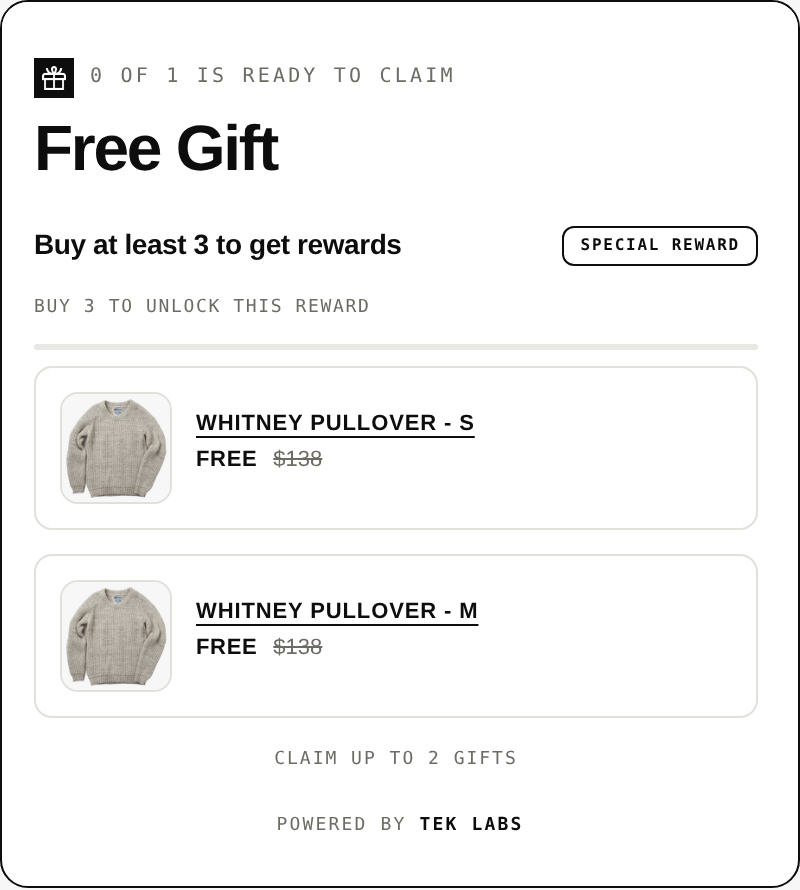
Our free gift threshold calculator works through the arithmetic. The worked example below shows why it matters.
Volume discounts
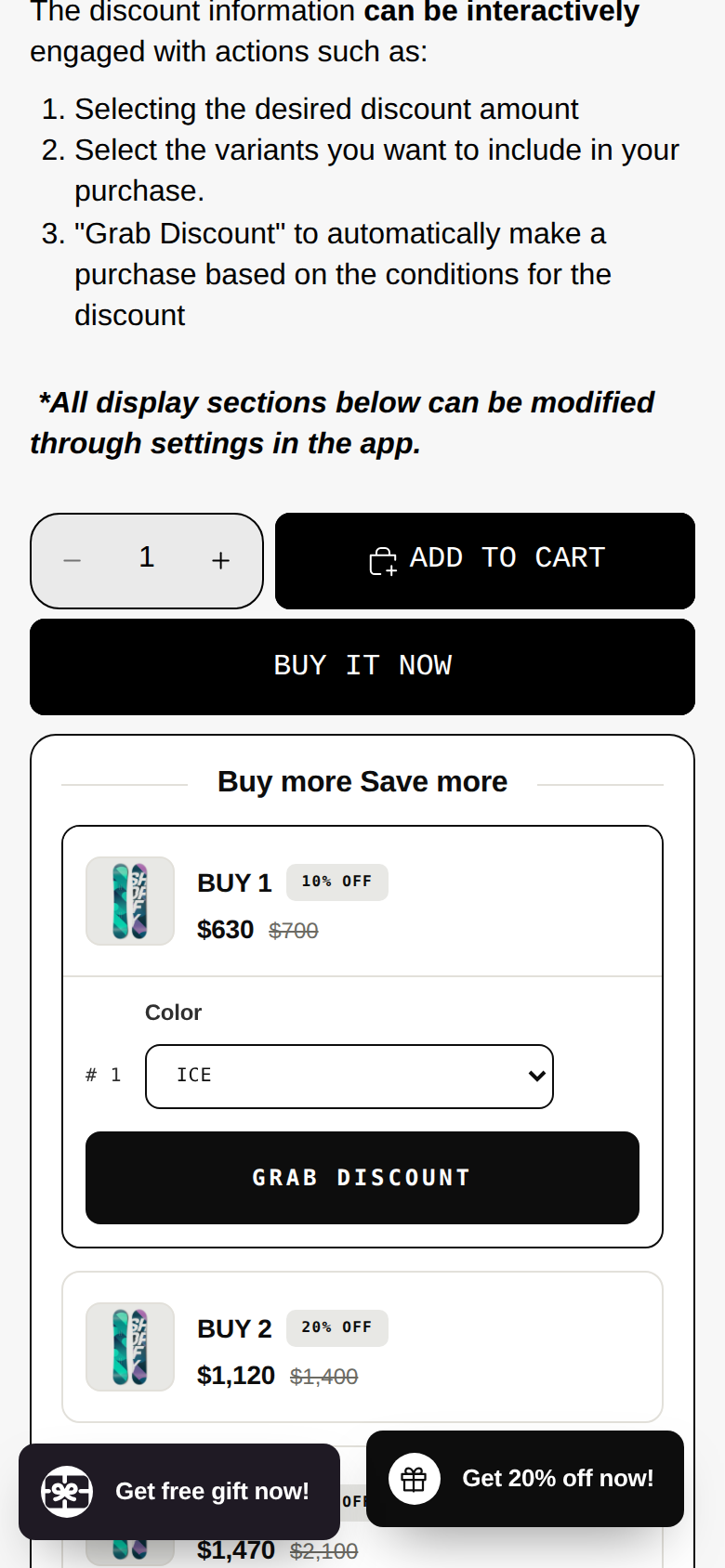
Volume tiers (“buy 2 save 10%, buy 3 save 15%”) are a natural fit for multi-child households and for items that are used up, such as notebooks. They reward the larger basket without discounting the first unit. Check how they interact with other offers: Shopify applies product discounts first and order discounts to the revised subtotal, and limits stores to 25 active automatic discounts, including app-based ones, so a store running BOGO, a volume tier and a sitewide code at once should test the combinations before launch.
Post-purchase offers for parents
A parent who has just paid is the most committed they will be. Shopify’s developer documentation describes the post-purchase page as appearing after the order is confirmed, but before the Thank you page, where an app can offer upsells, donation requests or discounted product offers.
For back-to-school, three post-purchase ideas fit what NRF found:
- Add a missing item. A parent who bought a backpack gets a one-click offer for the matching lunch box.
- Replenishment. With 47% planning to buy essentials first and replenish later, offer a restock bundle at a price held until a date in the fall.
- Second child, second kit. A kit for a sibling at a modest discount.
The Shopify documentation also lists limits to plan around. Orders need to be $0.50 or more, a customer can accept a maximum of three post-purchase offers per checkout, orders must come through the Online Store sales channel, and the post-purchase page is not shown when the customer pays with an installment service or a wallet such as Apple Pay, Google Pay or Klarna. In other words, a share of your buyers will never see it, so measure its value on the orders that do.
Baymard’s research on checkout makes a point of timing: it advises avoiding forced offer decisions in the middle of checkout and keeping special offers passive or moving them to the confirmation page. That is the argument for putting a cross-sell after payment rather than inside the checkout. Our Post Purchase Upsell app offers post-purchase and thank you page upsells, multiple funnels by customer segment and thank you page surveys, and is free to install.
Worked example: free gift or 20% off?
This example is hypothetical. It compares two ways to run a sale for a store that sells backpacks and stationery. Costs exclude shipping and fees to keep the arithmetic clear.
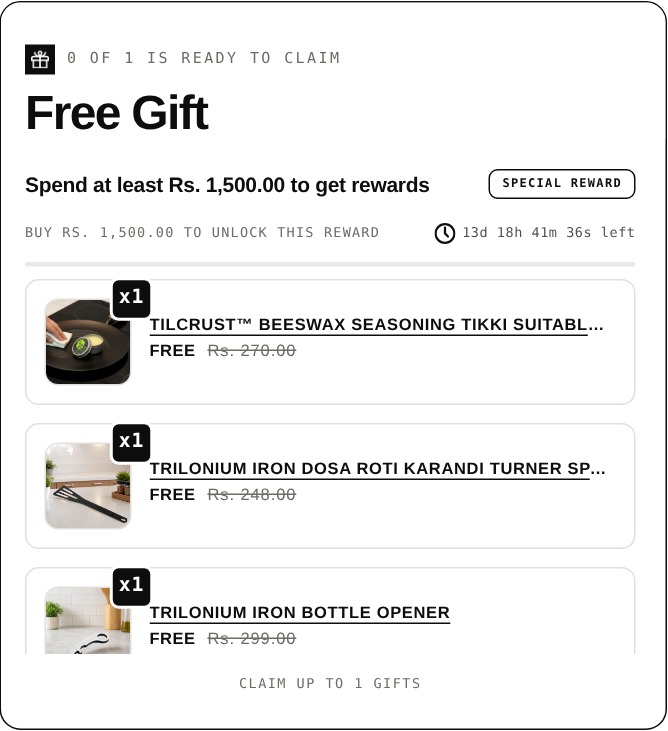
Assume four products:
- Backpack: $45 price, $20 cost
- Notebook 5-pack: $14 price, $5 cost
- Pen set: $9 price, $3 cost
- Lunch box: $18 price, $8 cost
A typical order today is a backpack and a notebook pack: $59 in revenue, $25 in cost, $34 in margin. Assume 1,000 such orders a month, which is $34,000 in margin.
Option A: 20% off the whole store
The same $59 basket becomes $47.20. Margin falls to $22.20 per order ($47.20 minus $25). To earn the same $34,000, the store needs about 1,531 orders ($34,000 divided by $22.20), or roughly 53% more orders. If the discount lifts orders by only 25% (1,250 orders), margin is 1,250 x $22.20 = $27,750, which is $6,250 less than before.
Option B: free pen set when the order is $65 or more
The pen set costs the store $3. A shopper at $59 can reach $65 by adding the $18 lunch box, ending at $77. Margin on that order: $77 revenue minus $33 cost for the three items minus $3 for the free pen set = $41, which is $7 more than the typical order.
If 20% of shoppers top up (200 orders) and 80% do not (800 orders at $34):
- 200 x $41 = $8,200
- 800 x $34 = $27,200
- Total: $35,400, which is $1,400 more than the baseline
If only 10% top up, the total is (100 x $41) + (900 x $34) = $34,700, still $700 above baseline. The gift only costs money on orders that qualify, and in this setup the only qualifying orders are the ones that topped up.
What the example shows, and what it hides
The simple rule is net result = (top-up orders x margin gained per top-up) minus (all qualifying orders x gift cost). If many of your baseline orders already exceed the threshold, the second term grows and the result can turn negative. Option A also assumes the discount does not attract new customers, which a deeper discount sometimes does, and Option B assumes shoppers top up with the same product mix. Real shopper behavior will differ, so treat it as a template and run your own numbers. It is also why we suggest testing a threshold on a small slice of traffic first.
Inventory, shipping and operations
Offers only work if the stock is there at the right time. A few operational points:
- Decide your cutoffs. Because 52% of K-12 shoppers plan to finish in the last two weeks before school, publish an “order by” date for each region and shipping method.
- Reserve stock for the gifts. A free gift is inventory you cannot sell, and Shopify’s discount documentation notes that a free item showing zero inventory displays as sold out.
- Count bundle components. Bundles draw on component inventory, so a popular kit can sell out of one component and block the whole kit.
- Plan the tail. Whatever is left in October needs a plan. Our guide on how to liquidate excess inventory covers the options.
- Keep your returns policy clear. Parents buying for a child’s school list often buy sizes and specifications they cannot check, so a clear returns policy before the sale reduces second-guessing.
Marketing: email, social and AI search
NRF’s data points to three channels worth attention:
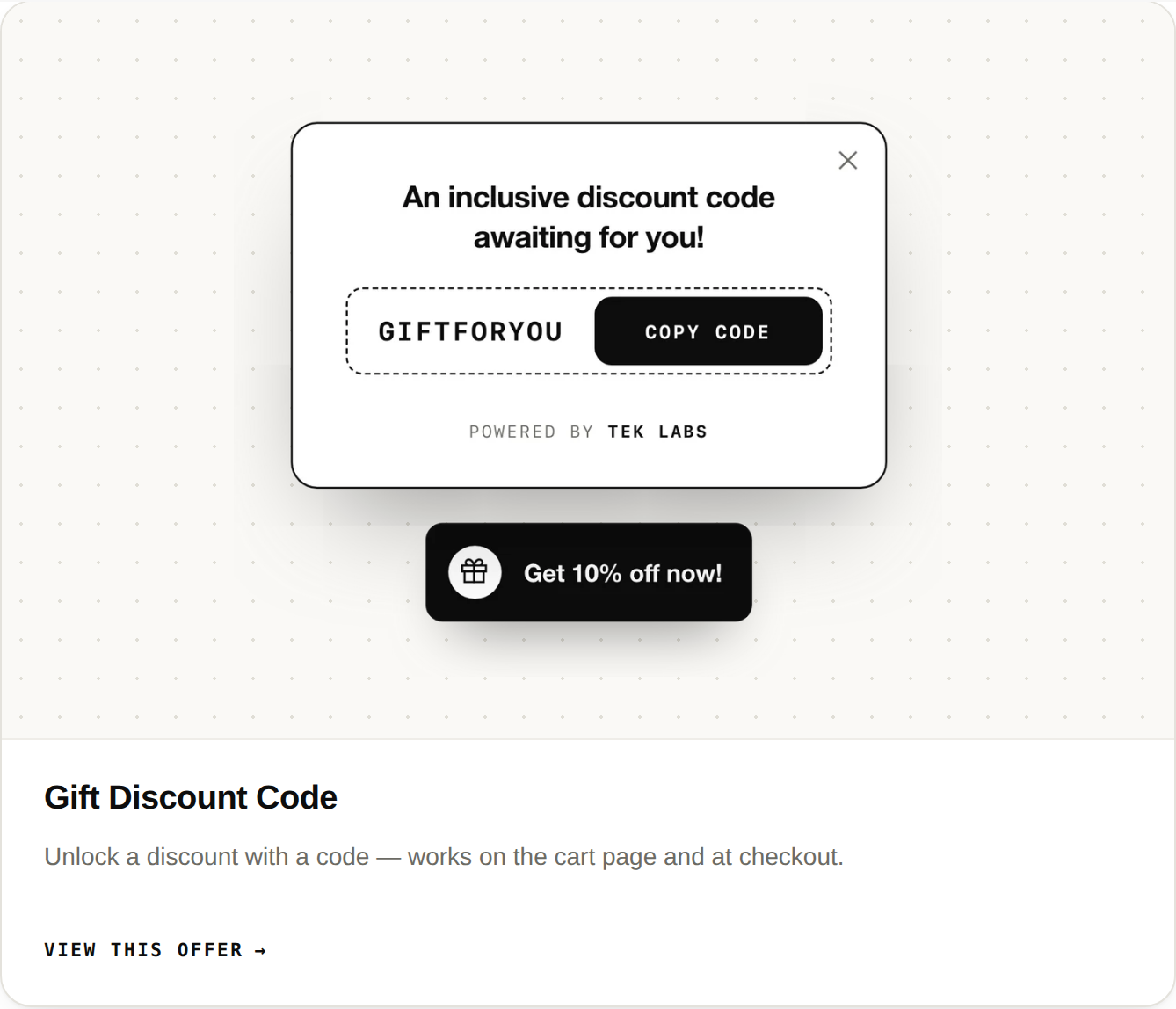
- Email and SMS for early access. Your list is the best audience for early access to bundles, especially in the first window. Segment by what past customers bought (grade level, product type) so the kit you promote matches the buyer.
- Social for the older shopper. NRF says college shoppers aged 18 to 24 look for inspiration on Instagram and TikTok, so those are the channels for dorm and campus products. For K-12, the buyer is the parent but the influence is the child, so show the product in use.
- Clear product data for AI tools. With 61% of back-to-school shoppers saying they used generative AI or AI-powered shopping tools to find prices, discounts and ideas, make sure product titles, sizes, materials and prices are specific and consistent. That is a reasonable inference from NRF’s number, not a measured effect.
A planning calendar for the 2027 season
It is October 2026, which is the right time to start planning the 2027 season. The timeline below is our suggestion, anchored on the NRF finding that many shoppers begin in June and early July.
| When | Task | Output |
|---|---|---|
| October to November 2026 | Review your 2026 sales by week, product, country and offer. Note what sold out and what did not. | A one-page post-mortem |
| December 2026 to January 2027 | Decide the product range and kits. Confirm supplier lead times and minimum orders. | Product and kit list, purchase plan |
| February to March 2027 | Design bundles and gifts. Check unit economics with a threshold calculator. | Offer specs and margin check |
| April 2027 | Build and test offers on a staging theme or a small traffic slice. Check discount combinations. | Tested offers |
| May 2027 | Build the email list with a signup offer. Write and schedule early-access emails. | Segments and scheduled campaigns |
| June 2027 | Soft launch to your list and watch competitor and marketplace events. NRF found 54% used June events in 2026. | Early-access sales |
| July to mid-August 2027 | Main sale. Adjust offers weekly using the data. | Weekly results |
| Mid-August to September 2027 | Last-two-weeks push with cutoffs and ready-made kits. Turn on post-purchase offers. | Fast-shipping and restock offers |
| October 2027 | Clear leftovers, record results, and repeat. | Post-mortem for 2028 |
Marketplace event dates move. Amazon held Prime Day 2026 in June, so check each year’s announcements before you fix your own window. The calendar also assumes a US-first store. For other markets, shift the windows to match local school terms.
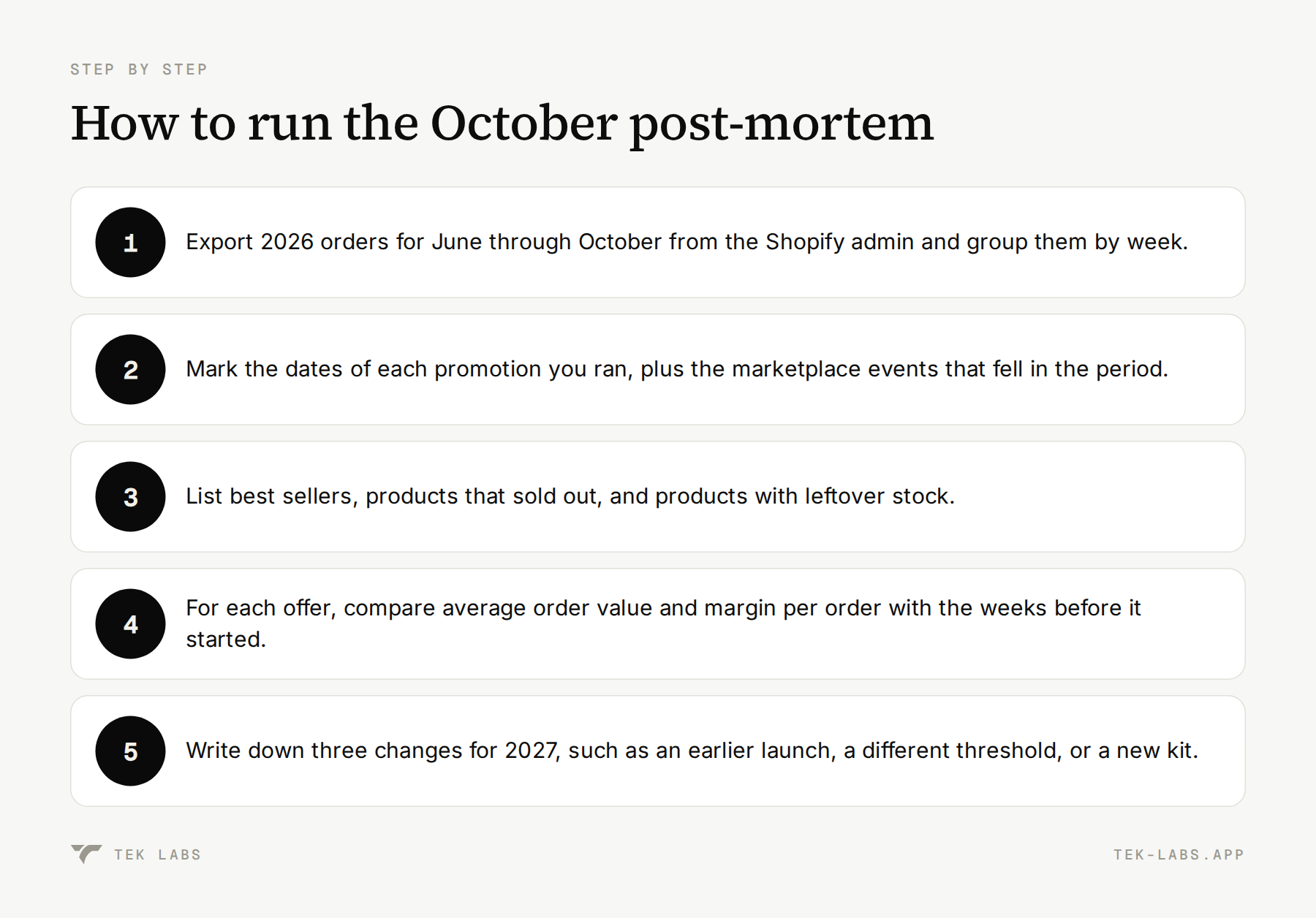
How to run the October post-mortem
- Export 2026 orders for June through October from the Shopify admin and group them by week.
- Mark the dates of each promotion you ran, plus the marketplace events that fell in the period.
- List best sellers, products that sold out, and products with leftover stock.
- For each offer, compare average order value and margin per order with the weeks before it started.
- Write down three changes for 2027, such as an earlier launch, a different threshold, or a new kit.
Common mistakes
- Starting in August. NRF found 62% had started by early July in 2026, so late launches miss the first and largest wave of planning.
- Treating “planning to buy online” as the share of sales that is online. It is the share of shoppers who named online as a destination.
- Discounting everything. A flat percentage cut hits margin on every order, as the worked example shows.
- Setting a gift threshold below what many customers already spend.
- Stacking offers without testing how Shopify combines them.
- Running BOGO without counting free units as committed stock.
- Forgetting that a share of shoppers use wallets or installment services and never see the post-purchase page.
- Copying US timing for other markets. School terms are set locally.
- Using last year’s headline numbers. NRF’s 2024 spending and online share figures are out of date.
Next step
If you want to test a gift threshold or BOGO before the 2027 season, our Free Gifts BOGO & Upsell app supports free gifts with purchase, BOGO, Buy X Get Y, volume discounts and fixed bundles, with gifts that are auto-added or chosen by the customer, and it has a free plan. You can try the demo store (password 1) first.
Frequently Asked Questions
When should a Shopify store start a back-to-school sale?
NRF’s 2026 survey found 62% of US shoppers had started by early July, so early access for your list should begin in June. Run the main sale from mid-July, and plan a last-two-weeks push because 52% of K-12 shoppers planned to finish then.
How much do families spend on back-to-school?
NRF’s 2026 survey found K-12 households plan to spend an average of $863.86, with a record $43.3 billion in total. College households plan to spend an average of $1,437.79. These are US survey results.
Are bundles or discounts better for back-to-school?
Bundles and thresholds usually protect margin better than a sitewide discount, because they raise order size instead of cutting every price. The worked example above shows the arithmetic, but your own margins decide.
Do post-purchase upsells work for back-to-school?
They can, because the parent has already paid and may want a matching or replenishment item. Shopify limits when the page shows (for example, it is not shown for wallet or installment payments), so measure results on the orders that see it.
Is it too early to plan for the 2027 season?
No. Reviewing your 2026 results in October and November and confirming supplier lead times over the winter leaves time to test offers in spring, before the June window that many shoppers use.