The Christmas promotion ideas that fit a Shopify store best are gift sets with a clear set price, a stocking-stuffer shelf under a price ceiling, an advent or countdown box, a gift for orders placed before your last-shipping day, and a one-click gift add-on after payment. Christmas Day 2026 is Friday, December 25, and USPS recommends mailing by December 17 for Ground Advantage, so most of these offers need to be built in the next three weeks and checked against your own margin before they go live.
Key takeaways
- Christmas offers are not Black Friday offers with a red banner. They are built around gifting and a hard shipping deadline, which changes what you promote and when you stop.
- Pick the offer by what it protects. A gift set protects price perception, a stocking-stuffer shelf protects average order value, an advent box protects inventory planning, a last-shipping-day gift protects your cutoff, and a post-purchase add-on protects checkout conversion.
- Run a margin check on every offer. The worked examples below show a three-item gift set that needs at least one in three buyers to be incremental, and a deadline gift that nets $220 on 1,000 orders only when the threshold is set above usual order value.
- Use the carrier dates you can verify. USPS lists Thursday, December 17 for Ground Advantage, Friday, December 18 for Priority Mail and Saturday, December 19 for Priority Mail Express. Set your own order cutoff earlier than those.
- Three offers are enough. Shopify caps stacking, and every added offer is another combination to test.
What shoppers and the calendar tell you (2025 data, read 2026-10-04)
Christmas planning starts from three facts, all from last season, not forecasts for 2026.
First, shoppers start early. The NRF reported in its 2025 holiday FAQs that approximately two out of every five holiday shoppers had started browsing and buying before November, and a Shopify survey source says 61% of surveyed shoppers planned to start buying gifts before the end of October. By the time you launch a December offer, many of your customers have a list half finished.
Second, the season is large and gift-led. The NRF predicted November and December 2025 retail sales between $1.01 trillion and $1.02 trillion, and said consumers planned to spend $890 per person on holiday gifts, food, decorations and other seasonal items. It also noted that holiday sales have averaged about 19% of total retail sales over the last five years. Those are US retail totals, not your store’s numbers, but they explain why gift positioning matters more than a bare discount.
Third, shipping decides. Baymard’s cart abandonment research lists extra costs such as shipping, tax and fees as the top reason at 40%, and delivery that was too slow at 20%. In December both reasons are live: shoppers worry about the cost of shipping and the date of arrival. Shopify’s own list of promotion strategies also puts free shipping at the top of shopper preference, with 44% of respondents in Impact’s research prioritizing free and reliable shipping.
Cyber Week sets the shopper’s price anchor. Adobe measured $14.25 billion of online spending on Cyber Monday 2025, and 57.5% of that came through mobile devices. If you ran a deep percentage cut in late November, December offers that lean on gifts, sets and shipping dates give shoppers a reason to buy that is not “more discount.” For the Cyber Week plan, see our Cyber Monday promotion ideas; for the autumn build schedule, the BFCM offer checklist.
Five Christmas offers at a glance
| Offer | Best for | What it protects | Built with | Main risk |
|---|---|---|---|---|
| Gift set at a set price | Complementary products | Perceived value, AOV | Fixed or mix and match bundle | Cannibalizing full-price multi-item orders |
| Stocking-stuffer shelf under a price ceiling | Low-priced add-ons | Basket size | You May Also Like, pick-any-3 bundle | Small items with high handling cost |
| Advent or countdown box | Consumables, beauty, food, crafts | Inventory planning | Build a box bundle | Slot items running out |
| Last-shipping-day gift | Any store with a clear cutoff | Order timing, AOV | Free gift with purchase, start and end dates | Gifts to orders that would have qualified anyway |
| Post-purchase gift add-on | Gift buyers | Checkout conversion | Post-purchase offer | Offer not shown for wallet payments |
The rest of this post takes each in turn: what it is, how to build it, and a hypothetical margin check. All numbers in worked examples are assumptions for illustration, not benchmarks.
Offer 1: gift sets with a visible set price
A gift set bundles products a giver would otherwise have to pick one by one. The price is the persuasion: show the set price next to the sum of the parts.
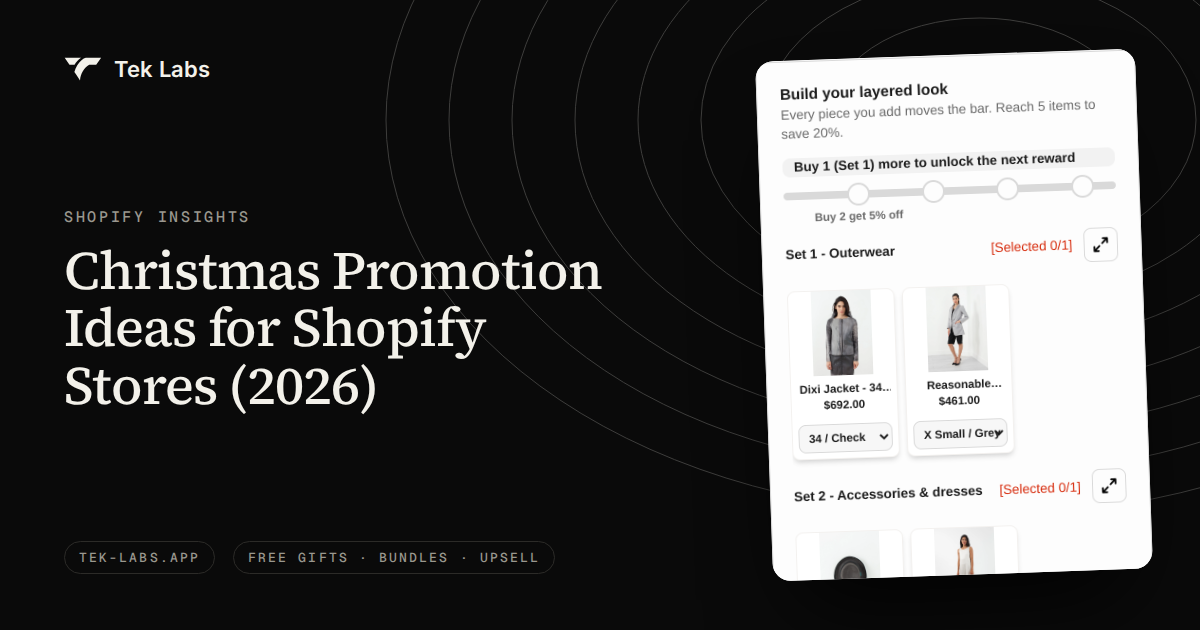
How to build it. For a fixed set, use a product bundle in Free Gifts BOGO & Upsell: pick the products and minimum quantities, set no discount, a percentage or a fixed discount, and show the block on the included products. For sets where the giver picks from groups, such as one scent and one accessory, use Mix & Match Bundles, which groups products into sets and lets you set selection rules and discounts.
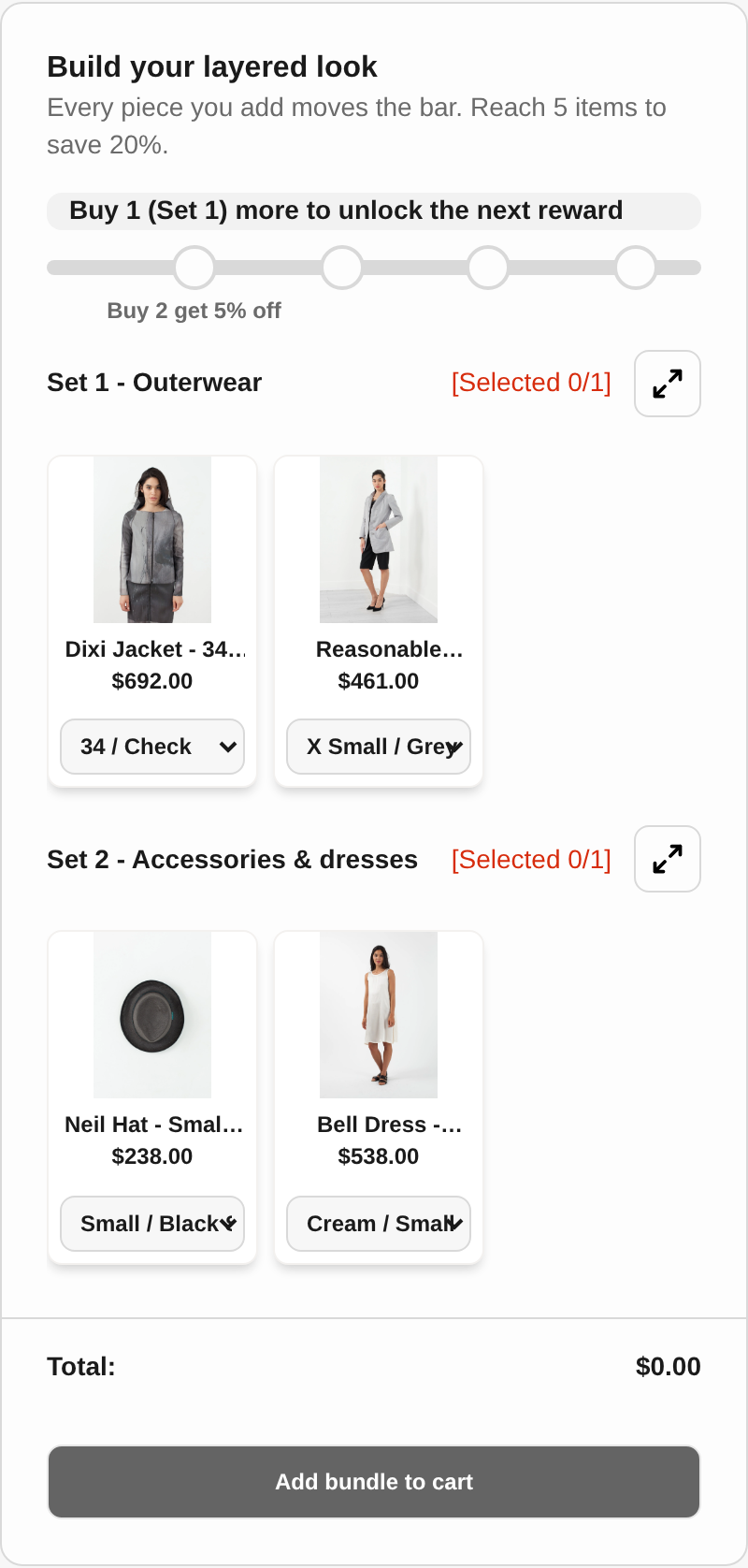
The widget above is a demo with apparel; for Christmas you would swap the sets for, say, “pick one candle, one soap and one balm.” Our holiday gift bundles guide goes deeper on pricing and stock.
Worked example 1: a three-item gift set (hypothetical)
A hypothetical store sells a candle for $28 (product cost $9), a soap for $14 (cost $4) and a balm for $12 (cost $3.50). Retail of the three is $54, product cost $16.50. Packaging for a gift set costs $3.50. The set is priced at $45, a 16.7% discount.
- Set revenue: $45. Cost: $16.50 + $3.50 = $20. Margin: $25 (55.6%).
- The same three items sold separately: $54 – $16.50 = $37.50 of margin, before packaging.
So each set that replaces a full-price three-item order loses $12.50 of margin, while each set that is a new sale earns $25. Break-even is where $25 x incremental sets = $12.50 x cannibalized sets, which is one incremental set for every two cannibalized sets. In other words, at least one in three set buyers must be someone who would not have bought all three items at full price. If your repeat customers mostly buy the trio already, narrow the set or price it closer to the sum.
Guardrail: set a minimum margin per set (here, $25 or 55%) and refuse to build a set that falls below it, even if the “save 20%” label would look better.
Offer 2: a stocking-stuffer shelf under a price ceiling
Stocking stuffers are small, low-cost items that people add late in the basket. The merchandising is a collection plus a rule: “everything under $15.”
How to build it. Create a collection of items below your ceiling. In the cart and on product pages, surface them with You May Also Like recommendations. To create a reason to add more than one, set a pick-any-3 bundle on that collection, or add a milestone rewards bar with a free shipping first tier so the small items cross the threshold. Shopify’s free shipping discount minimum purchase amount counts product prices only, so a stuffer of $9 moves the cart toward it by $9.
Worked example 2: pick any 3 stuffers for $24 (hypothetical)
A hypothetical stuffer sells for $9 and costs $3 to buy. Handling per extra item is assumed at $0.60.
- Three at full price: revenue $27, cost $9, handling $1.80, margin $16.20.
- Pick any 3 for $24: revenue $24, cost $9, handling $1.80, margin $13.20 (55%).
The offer costs $3 per trio. Assume 400 trios are sold. If 150 of those shoppers would have bought three singles anyway, you give up 150 x $3 = $450. If the other 250 are incremental and earn $13.20 each, that is $3,300, so the net is $2,850. The assumption that carries the result is the incremental share (62.5% here), so test a smaller one before you commit: at 25% incremental, 100 trios earn $1,320 against $900 of giveaway, a net of $420.
Guardrail: ceiling on price and on handling. A $4 item with $1.50 of packing is a stuffer that eats its margin.
Offer 3: an advent or countdown box
An advent box is a build-a-box with a theme: 12 or 24 small items, one per day. It is the most inventory-heavy idea here, so decide quantities first.
How to build it. The build a box option in Mix & Match Bundles lets you group products into sets, define selection rules and apply quantity rules and discounts. You can offer a fixed advent box, or a box where the customer picks the items for each slot. Start and optional end dates let you close sales when stock or shipping time runs out.
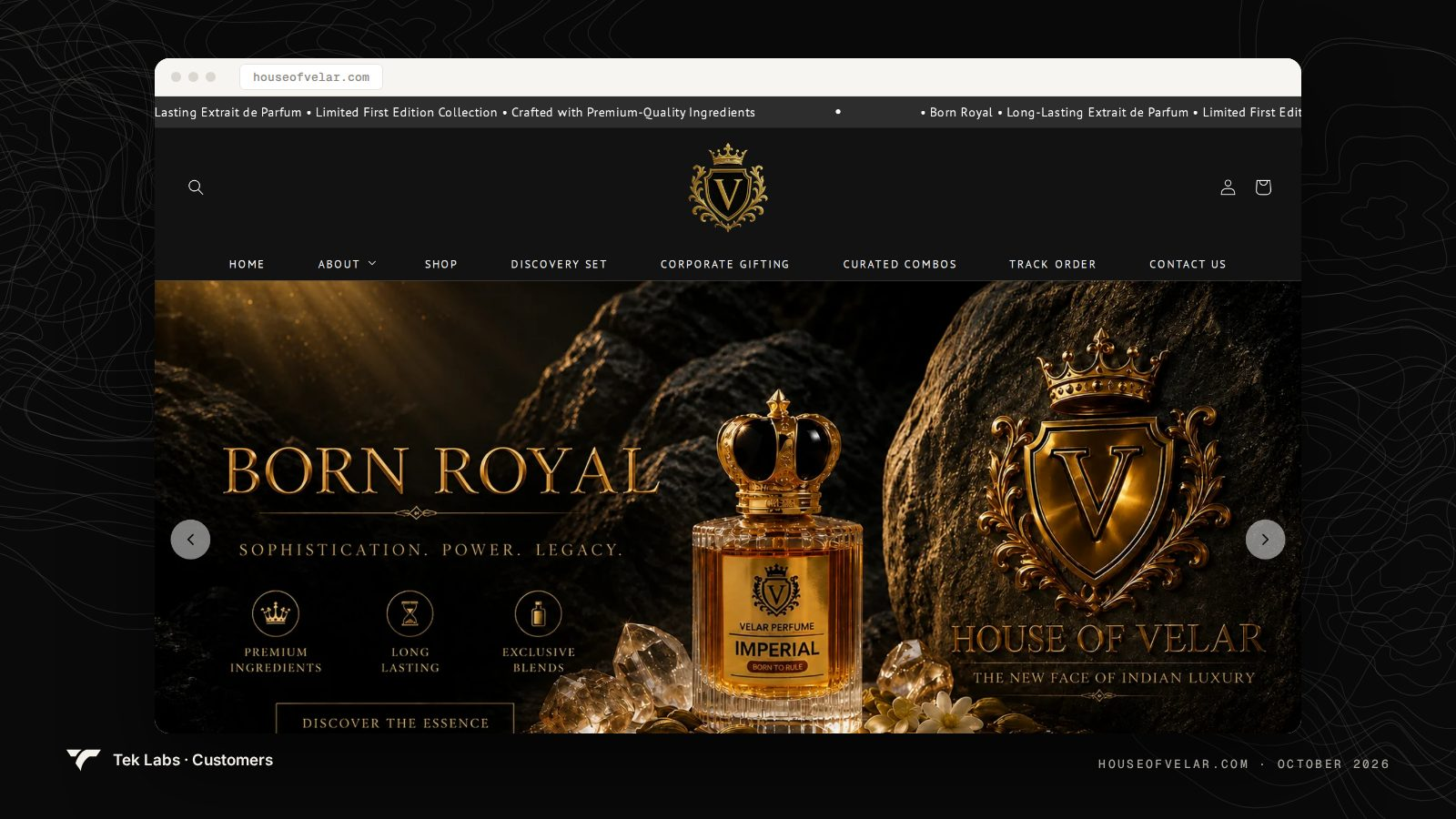
House of Velar, a fragrance store in India, is a gifting-minded example: its customer page describes a free 7-piece Discovery Set of 3 ml vials offered with any product purchase through the Free Gifts BOGO & Upsell app, which the page says keeps pricing intact while giving the customer a reason to explore the range. A discovery set and an advent box are close cousins: a small, varied sampler that works as a gift.
Worked example 3: a 24-item box (hypothetical)
A hypothetical box holds 24 items with an average retail of $6 and an average cost of $2. Retail value is $144, product cost $48, packaging $6. The box is priced at $99 (31% below the sum of the parts).
- Revenue $99, cost $54, margin $45 (45.5%).
- If you absorb $9 of free shipping, margin falls to $36 (36.4%).
Inventory is the hidden cost. If you plan 500 boxes, you need 500 units of every slot item. A single sold-out item breaks the box, so hold a substitute for each slot, set a hard cap on boxes, and ship early if the box is meant to start on December 1. The box that is never completed is a refund and a bad review.
Guardrail: price the box so margin after free shipping still clears your floor, and cap units at the stock you can actually fill.
Offer 4: a gift for orders placed before your last-shipping day
This is the Christmas-specific version of a spend-threshold gift: the free item is available only until your cutoff. Its job is partly to raise basket size and partly to pull orders earlier, before carrier deadlines.
Step 1: know the carrier dates. USPS’s September 22, 2026 release gives recommended mailing dates for expected delivery before December 25: Ground Advantage and First-Class Mail on December 17, Priority Mail on December 18 and Priority Mail Express on December 19. The USPS holiday page lists the same three service dates and says deadlines for Alaska, Hawaii, Puerto Rico and U.S. territories are one day earlier. I could not open the UPS or FedEx holiday pages when writing this, so check those carriers directly before you publish their dates.
Step 2: set your own cutoff earlier. A carrier send-by date is when a parcel must be handed over, not when a customer can order. Shopify’s help center notes that its delivery date calculation uses a business day cutoff of 12 pm in the local timezone of the shipping origin. If you ship within one business day and your last Ground Advantage hand-off is Thursday, December 17, an order cutoff of Tuesday, December 15 leaves a buffer; you may choose a larger one.
Step 3: build the gift with an end date. In the Free Gifts BOGO & Upsell app, create a free gift with purchase rule by cart value, choose the gift and set the end date and time to your cutoff. Set usage limits so it applies once per order, and choose a gift that is easy to include in any parcel.
Step 4: say the date next to the offer. The FTC’s guide to “free” offers, 16 CFR 251.1, says all the terms, conditions and obligations should appear in close conjunction with the offer. Put the minimum spend and the deadline in the banner and next to the gift widget.
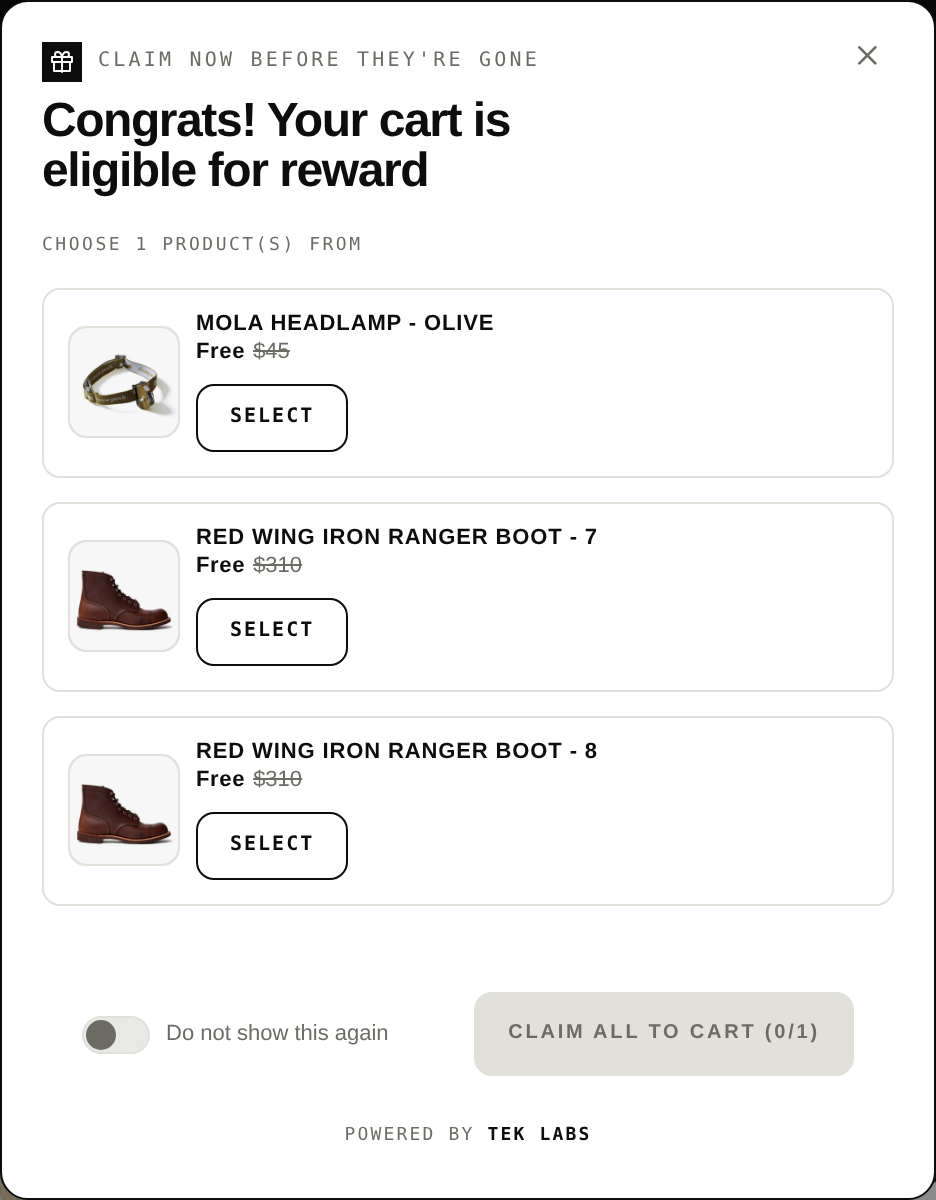
A caution on promises. Under the FTC’s mail, internet or telephone order rule, 16 CFR 435.2, a seller must have a reasonable basis to expect it can ship within the time it states, and if it cannot it must promptly tell the buyer and offer the choice of a delay or a prompt refund. A banner that promises Christmas delivery is a shipping-time statement, so only promise what your fulfillment can meet.
Worked example 4: a deadline gift (hypothetical)
A hypothetical store expects 1,000 orders in the window. Usual order value is $64 at a 55% product margin. The gift is a small pin that costs $3 landed (retail $12), offered on orders of $75 or more placed by December 15.
- Orders already at or above $75: 120. Gift cost to them: 120 x $3 = $360.
- Orders stretched to $75: 100, with an average extra spend of $16. Extra margin: 100 x $16 x 0.55 = $880. Gift cost to them: 100 x $3 = $300.
- Net: $880 – $300 – $360 = $220.
At a $65 threshold, many more orders would already qualify, the free-rider cost would climb and the same stretch would not cover it. Pull last year’s order-value distribution from your Shopify reports and place the threshold above the middle of it. Our free gift threshold worked example and the free gift calculator run the full arithmetic.
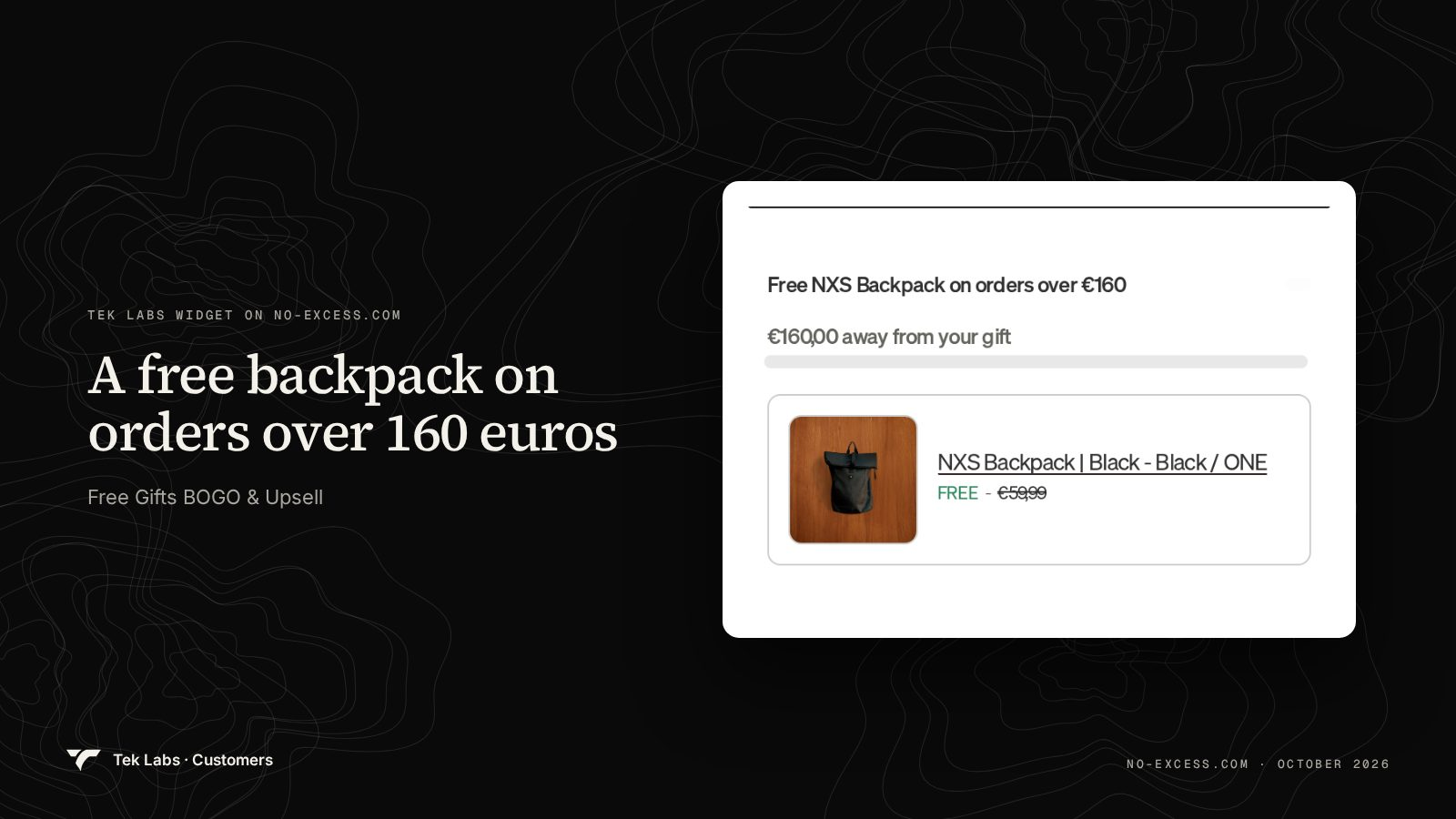
The No Excess example is a useful pattern for the higher-priced end. The store’s customer page says it offers a free branded backpack valued at 59.99 euros on orders over 160 euros, set above a single jacket so shoppers add another piece. For a Christmas version, you would add a date to the same structure.
Offer 5: a post-purchase gift add-on
Gift buyers often want a gift box, a card or a small extra after they have paid. A post-purchase offer lets you ask once, with one click, without touching the checkout flow.
How to build it. The Post Purchase Upsell app shows an offer right after payment and on the thank you page, supports funnels with up to two upsells and a downsell, and has a countdown timer. Per its Shopify App Store listing, post-purchase offers and thank you page upsells do not require Shopify Plus; only the checkout editor does. You can limit a funnel by order contents, order value, shipping country or dates, so a “gift add-on” can appear only for orders above a threshold or only before your cutoff.
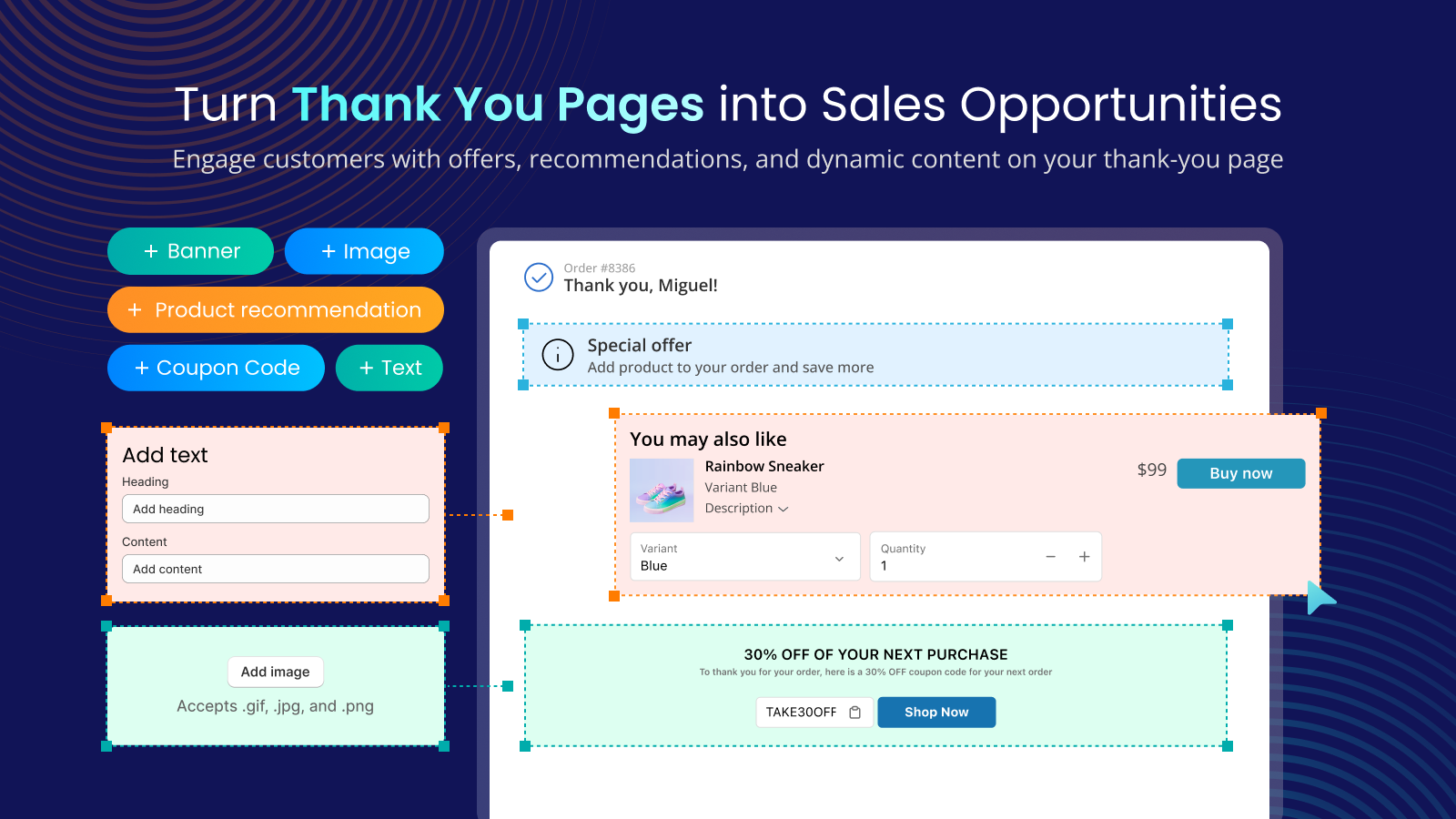
Two limits matter. Shopify’s Buy X get Y discounts made in the admin do not apply to the post-purchase page, so price the add-on directly. And per the app’s feature page, Shopify’s limits mean the offer may not appear for orders paid with wallets or installment services; Adobe measured $1.03 billion of buy now pay later spend on Cyber Monday 2025, so a share of orders may never see the page. For more on setup, see our post-purchase upsell without Plus guide and, from November 5, our guide to what to add to the thank you page.
Worked example 5: a gift box add-on (hypothetical)
A hypothetical gift box with a message card sells for $8. Materials cost $2.50 and handling is $1.50, so margin is $4 per accepted offer.
- If 6% of 1,000 orders accept (an assumed rate, not a benchmark), that is 60 x $4 = $240 before payment fees.
- If acceptance is 2%, it is $80, which may not cover the time spent packing. Decide your minimum acceptance before you launch.
Guardrail: physical add-ons that need extra handling can slow shipping. Only offer what your team can pack within your normal handling time.
A Christmas timeline from November 9
December 25 is a Friday. Working back from the USPS dates gives this schedule. Adjust it to your own handling time.
| Date | Task |
|---|---|
| Nov 9 to Nov 13 | Choose three offers. Run the margin math from the worked examples with your own costs |
| Nov 16 to Nov 20 | Build sets, shelf and gift rules. Set start and end dates. Order stock for advent boxes |
| Nov 23 | Test: place a test order on desktop and phone, with a wallet and with a discount code |
| Nov 26 to Nov 30 | Cyber Week runs. Do not change Christmas offers unless something is broken |
| Dec 1 | Christmas offers are live. Advent boxes meant to be opened from Dec 1 should already be on sale and shipped |
| Dec 15 | Your own order cutoff in the example, for standard shipping |
| Dec 17 | USPS Ground Advantage and First-Class Mail recommended mailing date |
| Dec 18 | USPS Priority Mail recommended mailing date |
| Dec 19 | USPS Priority Mail Express recommended mailing date |
| Dec 25 | Christmas Day. Offers should have ended well before |
After the cutoff, change the offer, not just the banner. Switch the gift to a “gift card by email” or a “first order of the new year” message, because the NRF notes that the vast majority of returns occur in January, and a clear returns note helps gift buyers.
Testing before you go live
Use Shopify’s Test payment gateway to place a test order, as described in its help center, and remember that customers cannot place live orders while a payment provider is in test mode. Then check each of these:
- The gift appears once and is free, and it disappears if the qualifying item is removed.
- The end date and time match your stated cutoff in the right timezone.
- A discount code and an automatic offer combine the way you decided. Shopify allows up to 25 active automatic discounts and, per order, up to 5 product or order discount codes plus 1 shipping discount code, and on non-Plus plans products in a Buy X get Y discount cannot take further product discounts. See the Shopify discount combinations page.
- A sold-out gift or bundle component is hidden or replaced.
- The offer looks right on a phone, where Adobe measured 57.5% of Cyber Monday 2025 sales.
- The shipping message matches the cutoff you set.
Common mistakes
- Promising a delivery date you cannot meet. A late parcel after a Christmas banner costs more than the offer earned.
- Pricing a gift set too close to the sum of its parts. Then it is not a set, just a longer cart.
- Building an advent box without a stock plan. One sold-out slot item ruins the box.
- A gift threshold at or below your usual order value. You pay for every gift and change nothing.
- Leaving the offer live after the cutoff. Customers order, then learn it will not arrive in time.
- Running more than three offers. Each extra offer adds combinations you will not have time to test.
- Hiding the terms. Put the minimum spend and the deadline next to the offer, as the FTC guide on “free” offers asks.
Putting it into practice
Choose three of the five offers, price each with your own costs and set end dates before anything goes live. If you want gifts, sets and a progress bar in one app, Free Gifts BOGO & Upsell has a free plan, and the Pipocraft example below shows what an automatic starter gift looks like on a storefront.
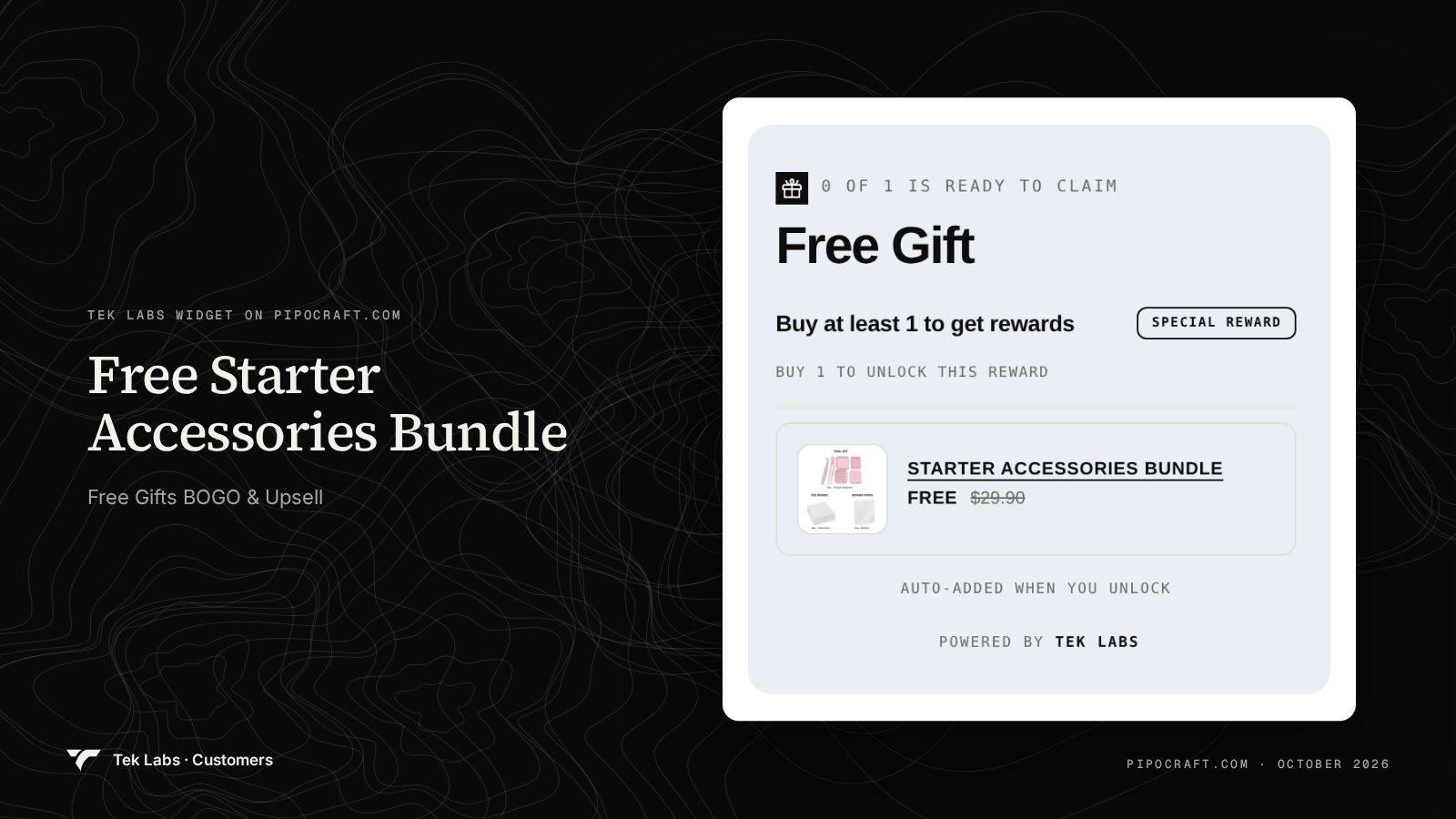
The Pipocraft customer page describes the same offer: a Starter Accessories Bundle valued at $29.90 added automatically with a purchase of its fuse bead patterns. A gift that arrives without a code or an extra click suits gift buyers who are shopping in a hurry.
Frequently Asked Questions
What are the best Christmas promotion ideas for Shopify?
The ones that fit gifting and the shipping deadline: gift sets with a visible set price, a stocking-stuffer shelf, an advent box, a gift for orders placed before your cutoff and a one-click gift add-on after payment. Choose three and price each against your own margin first.
What is the last day to ship for Christmas in 2026?
USPS recommends mailing by Thursday, December 17 for Ground Advantage and First-Class Mail, Friday, December 18 for Priority Mail and Saturday, December 19 for Priority Mail Express, for expected delivery before December 25. Alaska, Hawaii, Puerto Rico and U.S. territories are one day earlier. Check UPS and FedEx separately, and set your own cutoff earlier than the carrier date.
How do I run a free gift promotion only until a certain date?
Create the free gift rule in an app that supports start and end dates, set the end to your order cutoff, and show the deadline next to the offer. Shopify’s own Buy X get Y discount does not auto-add the free item, so a gift app is the usual route if you want the gift in the cart without the shopper adding it.
Can I run a Christmas offer on top of my Black Friday discount?
Only if the two can combine. On Shopify plans other than Plus, products in a Buy X get Y discount are not eligible for further product discounts, and customers can use at most 5 product or order codes plus 1 shipping code per order. Test the exact combination on a real cart first.
Does a post-purchase upsell need Shopify Plus?
No. Per the Post Purchase Upsell listing on the Shopify App Store, offers shown after payment and on the thank you page do not need Plus; only the checkout editor does. Shopify’s limits mean the offer may not show for wallet or installment payments.
How many Christmas offers should a small store run?
Two or three. A small team cannot test every combination of a gift, a set, a code and a shipping tier. Pick the offers that match your catalog, set end dates and write a margin floor for each.